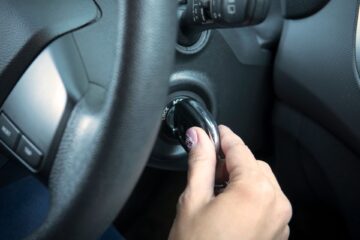
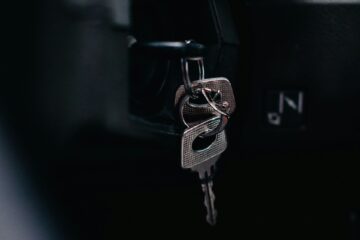
I spend a good part of my week with my head under a Transit steering column. Vans get worked hard, and the ignition barrel takes more punishment than most drivers realise. Every drop, every site visit and every quick stop at the wholesaler is another turn of the key. Over a few years that adds up to tens of thousands of turns.
The good news is that a barrel hardly ever fails without warning. If you know what to look for, you can usually get it sorted before it leaves you stranded on a job. Here’s what I see most often, what’s usually behind it, and what you can safely try yourself before you ring me.
1. The key has started to feel stiff
This is nearly always the first sign. The key goes in fine, but you need a bit more effort to turn it, or you have to jiggle it before it catches. The van still starts, so most people live with it for months.
What’s actually going on is that the small wafers inside the barrel are wearing, and so are the cuts on your key. They wear together, so the key still works, just not smoothly. Try your spare key. If the spare turns noticeably easier, the problem is your everyday key rather than the barrel, and a new key cut to the original code might be all you need.
2. The key won’t turn at all
Before you panic, check the steering lock. If the wheels were turned when you parked, the lock can bind against the barrel and stop the key moving. Rock the steering wheel gently left and right while you turn the key. More often than you’d think, that’s all it is.
If the wheel moves freely and the key still won’t budge, the wafers are probably stuck or worn past the point where they line up. Don’t force it. I’ve been called out to plenty of Transits where the driver snapped the key in the barrel trying, and that turns a straightforward job into a bigger one. I’ve written more about this in my guide to a key that won’t turn in the ignition.
3. The key won’t come back out
You switch off, go to pull the key out and it won’t release. Sometimes it comes free after a wiggle, sometimes only at one particular angle. On an automatic, make sure it’s fully in Park first. On a manual Transit it’s usually wear inside the barrel, and it tends to get worse quickly once it starts. My guide on what to do when your car key is stuck in the ignition goes through the safe ways to get it out.
4. The barrel feels loose or wobbles
A healthy barrel sits solid in the column. If it moves when you put the key in, or the front of it sits proud of the housing, something isn’t right. Sometimes that’s worn parts inside. Just as often on Transits, it’s because someone has had a go at forcing the barrel to steal the van. Even a failed attempt can leave the barrel loose and the housing damaged, so it’s worth getting it looked at even if the van still starts.
5. The key turns but nothing happens
No dash lights, no crank, nothing at all. People tend to assume the barrel has gone, but on Transits it’s very often the ignition switch instead. The switch is the electrical part fixed to the back of the barrel, and it’s what actually sends power through the van when you turn the key. The barrel can be perfectly fine and the switch can still fail, especially on the older shape Transits from around 2006 to 2014.
That’s exactly why I test before I replace anything. Swapping a barrel when the switch is at fault costs you money and doesn’t fix the van.
If the engine cranks but won’t fire, it’s usually not the barrel at all. Check the battery and fuel first. Then watch the small security light on the dash while you turn the key. If it’s flashing quickly, the van isn’t recognising your key, and that’s a programming job rather than a barrel one.
6. Why Transit barrels wear out faster than car barrels
It mostly comes down to use. A car might get started twice a day. A van on delivery rounds can be started thirty or forty times. The barrel is much the same design, it’s just doing far more work.
Heavy keyrings make it worse. A big bunch of keys hanging off the ignition key pulls on the barrel every time you go over a bump, and over months that wears it unevenly. Keep the van key on its own, or on a light ring.
Dirt plays its part too. Vans that live on building sites pick up dust and grit, and some of it ends up in the keyway. A worn key adds to it, because a key that’s lost its shape puts uneven pressure on the wafers and speeds up wear on both.
Then there’s the cold. A barrel that’s already on its way out will often seize on the first proper frost of the year. That’s when my phone gets busiest.
7. What I check when I get to you
I always start with the simple things. I try your spare key, check the steering lock and look at your key under a light to see how worn the cuts are. Then I check the switch, so I know it really is the barrel at fault. Only then do I tell you what it needs and what it’ll cost, before I touch anything.
Most of the time I can do the whole job at the roadside, on your drive or in the yard. If the barrel needs replacing, I fit the new one and make sure your keys match it, so you’re not left with one key that works and one that doesn’t.
8. Can it be repaired, or does it need replacing?
Sometimes a repair is the right call. If the barrel itself is sound and the problem is a worn key or dirt inside, a clean and a new key cut to code can sort it for a lot less.
If the wafers are worn down, the barrel has seized, or it’s been damaged in a theft attempt, I’ll always recommend replacing it. A repair on a badly worn barrel might get you home that day, but you’ll be ringing me again a few weeks later. I’d rather do it once and do it properly.
You can see how I do the full job on my Ford Transit ignition barrel replacement page, and what affects the price in my ignition barrel replacement cost guide.
9. What you can try yourself, and what to avoid
Try your spare key first. Rock the steering wheel while you turn the key. Wipe the key clean with a dry cloth and check it isn’t bent or cracked.
If you want to free up a stiff barrel, use a small amount of graphite or a dry lock lubricant. Don’t spray household oil into it. It feels like it’s helped for a day or two, then it picks up dust and the barrel ends up worse than before.
Never force the key, use pliers on it or tap it in with anything. A snapped key or a damaged barrel always costs more to fix than a barrel that’s just worn.
10. Questions I get asked a lot
Will I need new keys if the barrel is replaced?
Not always. Sometimes I can set the new barrel up to suit your existing key, as long as the key isn’t badly worn. If it is, I’ll cut you new ones so everything matches.
Do I need to take the van to Ford?
No. I come to you, wherever the van is. A dealer will usually want the van brought in, and they often replace the whole lock set rather than just the barrel.
How quickly can you get to me?
I cover Manchester and the surrounding area, and I’m usually with you within 15 to 30 minutes. I work 24 hours a day for emergencies.
If your Transit key is getting stiff, sticking or not turning at all, give me a call on 0161 706 2407 or send me a WhatsApp with a photo of the key and the van’s reg. I’ll tell you straight whether it sounds like the key, the barrel or the switch, and what it’ll cost before I set off.