On Tuesday 24 November, I was called out to a 2014 Ford Fiesta in Manchester city centre. The owner could turn the key, the dashboard lit up, and then nothing happened. No crank. The battery was fine, and so was the key. The ignition switch was the issue, and I replaced it where the car was parked.
I see this a lot. When your car won’t start, but the key still turns, the ignition switch is very often the cause. Fiestas and Focuses are the worst for it, and older VW Polos, Transporters and Amaroks aren’t far behind. It’s a fault I can usually fix at the car, which saves a tow and often saves a full ignition replacement you didn’t need. Here’s how to tell a faulty ignition switch from a flat battery or a worn barrel, and what an ignition switch replacement involves.
1. What Does The Ignition Switch Actually Do?
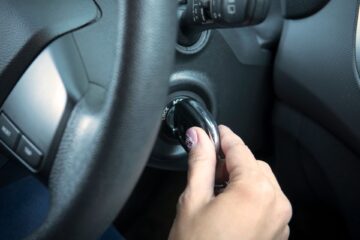
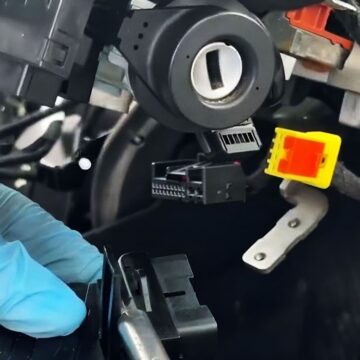
Most people think of the ignition as one part, but there are two. The barrel is the mechanical lock your key slides into. Behind it sits the ignition switch, an electrical part that the barrel turns. As the key moves round, the switch sends power to the dashboard, then to the ignition circuits and finally to the starter motor. When the contacts inside the switch wear, the key still turns normally. The power just doesn’t get where it needs to go. That’s why so many drivers are sure it’s the battery.
2. Faulty Ignition Switch Symptoms
The one I hear on the phone most often is simple. The key turns some of the way, or all the way, but the engine won’t crank. Sometimes the dashboard lights come on, and sometimes they don’t.
The other big clue is that it comes and goes. The car starts the first time on Monday, refuses on Tuesday, then fires up after a few tries on Wednesday. Plenty of people buy a new battery at this point, and a week later the problem is back. You might also see the dashboard lights or the radio flicker when you move the key slightly. In worse cases, the engine can cut out on the move, and that’s when I’d stop driving the car until it’s fixed.
3. Is It The Battery, The Starter Motor or The Ignition Switch?
A flat battery usually gives itself away before you even turn the key. The dashboard is dim or dead, the central locking is sluggish, and a jump start gets you going. A tired starter motor tends to click or turn the engine over slowly.
A faulty ignition switch is different. The battery is healthy, and the starter is fine, but the power never reaches it. Start Rescue’s breakdown guide puts it the same way. A faulty ignition switch can stop voltage from reaching the starter, so the car stays silent when you try to start it.
If your key won’t turn at all, that points to the barrel or the steering lock instead. I’ve covered that in why your key won’t turn in the ignition.
4. Ford Fiesta And Focus Ignition Switch Problems
I see this most with Fords. Years of daily starts wear down the contacts in the Fiesta and Focus ignition switch, and the symptoms are exactly the ones above. A key that turns, a dashboard that may or may not light up, and a car that starts when it feels like it.
On most of these cars, you can replace the switch without touching the barrel, so you keep your existing keys. On the Fiesta last week, the owner also had a spare key cut while I was there, which is worth doing if you’re down to one. Ford vans have their own weak spots in the ignition. If you run a Transit, check out common Ford Transit ignition barrel problems too.
5. VW Polo, Transporter and Amarok Ignition Switch Faults
Older Polos and the Transporter vans have a similar weakness, and I get the same calls about Amaroks. With a Transporter or an Amarok it’s usually a working vehicle, so a van that won’t start costs a day’s work on top of the repair. I try to get to those quickly and fix them where they’re parked, whether that’s the drive, a yard or a site.
6. Ignition Switch Replacement Cost
Every car is different, so I price each job on the vehicle and how much of the steering column has to come apart. Where people really lose money is a wrong diagnosis. I’ve done a good few of these for people who rang expecting a full ignition repair, and a new switch was all the car needed. Others had already bought a new battery, or paid for a tow to the dealer and waited days to hear what was wrong. Finding the right fault the first time, at the car, is where you save. Ring me with your registration, and I’ll give you a full price before I set off. There’s no call-out charge on jobs booked between 8 am and 6 pm. If it turns out the barrel is worn as well, my guide to ignition barrel replacement cost explains what changes.
7. Can I Drive With A Faulty Ignition Switch?
I wouldn’t rely on it. An intermittent switch might start the car today and leave you stranded tomorrow, and on some cars a worn switch can cut the engine while you’re driving.
8. Can a Faulty Ignition Switch Drain The Battery?
It can. If the switch doesn’t fully turn off, some circuits stay live after you’ve parked, and that can flatten a battery overnight.
9. Will I Need New Keys After an Ignition Switch Replacement?
Not usually. The switch sits behind the barrel, so your existing keys carry on working. You’d only need new keys if the barrel also needs to be replaced.
10. Do I Need To Go To A Main Dealer?
No. An auto locksmith can diagnose and replace the ignition switch where the car is parked, which saves you the tow. If I find the fault is one only the dealer can fix, I’ll say so.
11. How Long Does It Take to Replace an Ignition Switch?
On most Fiestas, Focuses and Polos, it’s a quick job once I’m with you. I’ll give you a time when you ring.